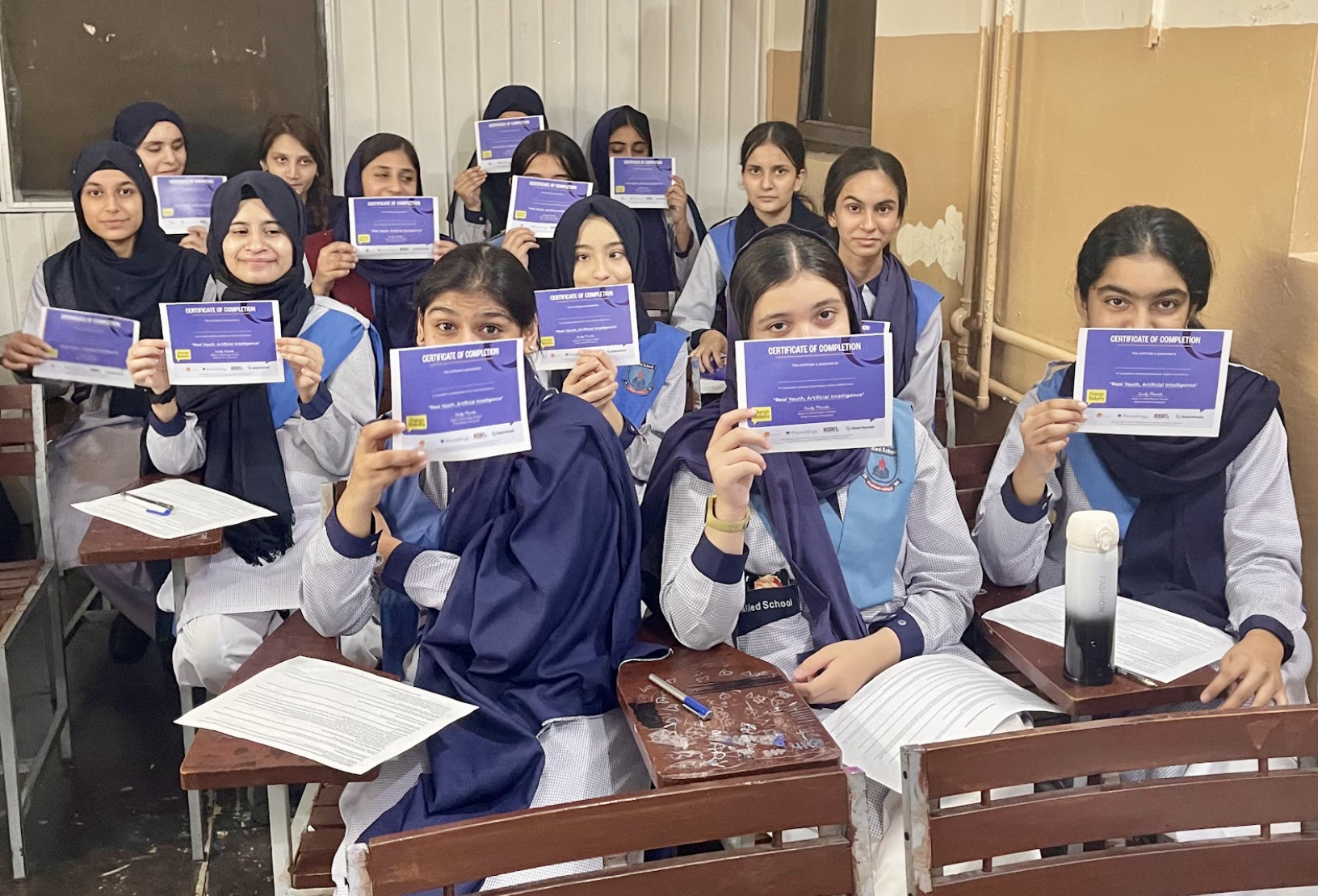
What happens when you take a student used to the “right or wrong” world of textbooks and remind them that their perspective is the most valuable asset in the room?
Since March 2024, Global Nomads Group joined forces with HETRiC to collaborate with 1000+ students and 100+ educators across nine institutions in Islamabad, Rawalpindi, Peshawar and Abbottabad in Northern Pakistan.
Through the Student to World program, these young people didn’t just join a course but also stepped into their roles as global citizens.
“Initiatives like Global Nomads’ Student to World break the mundane routine and expose students to a world beyond textbooks and regimented schedules.” — School Leader
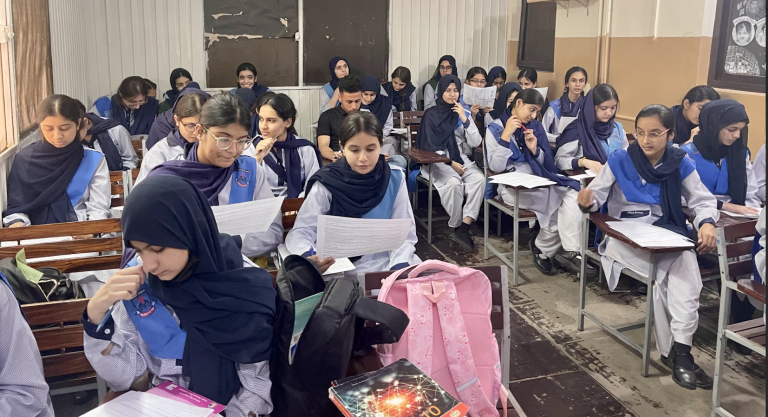
Redefining the Classroom Experience
In a school system often dominated by rote memorization, Student to World served as a bridge to new ways of thinking. Students moved away from silent desks and into group-based discussions where lived experience was the primary teacher.
Ursala Waqar, co-founder of HETRiC, witnessed this shift firsthand:
“Being on the ground throughout the program implementation has been incredibly rewarding. We witnessed an overwhelmingly positive response across schools… students were thrilled to collaborate and express their perspectives freely.”
Lived Realities and Radical Resilience
The heart of this partnership was found in the moments where students chose to be seen and heard on their own terms by sharing the parts of their lives that often go unacknowledged in a standard curriculum:
- In Islamabad: At G-7 Christian Sunday School, a student named Sehrish shared the personal challenges and prejudices she navigates as part of Pakistan’s Christian minority.
- At Falcon Grammar School: Afghan refugee students spoke with incredible candor about the pressure of deportation and their families’ struggles, demonstrating a level of resilience and a drive to lead the program themselves.
- In Peshawar: At Ujala School, a donation-based school for street children, students tackled the global hunger crisis. For them, this wasn’t a theoretical topic, it was a daily reality. Many contributed in Urdu or Pashto, ensuring their insights were understood across language barriers.
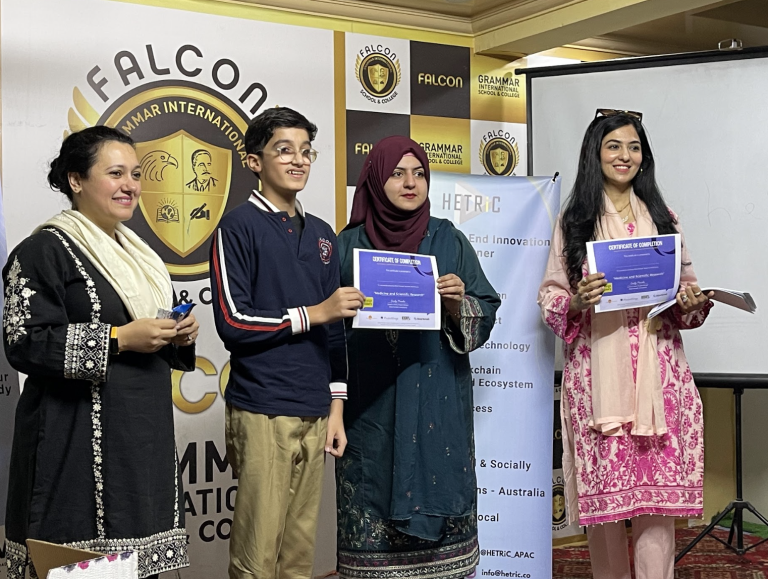
Rooted Locally, Connected Globally
This partnership proved that when we respect local expertise—working alongside partners like HETRiC—the impact reaches far beyond the classroom. By moving past “regimented schedules,” we aren’t “giving” youth anything they don’t already have; we are simply creating the space for them to exercise their agency.
“This work reminded us why cross-cultural dialogue is essential for developing empathy, critical thinking, and global citizenship among Pakistani youth.” — Ursala Waqar, HETRiC
The journey doesn’t end here. The tenacity shown by the students at Falcon Grammar and the leadership from the youth at Ujala School remind us that when the barriers are removed, young people don’t just participate, they lead the way.
About HETRiC
HETRiC is a women-owned, women-led ed-tech and innovation company that works at the intersection of global partnerships and local impact. It supports international organizations and institutions by providing end-to-end project facilitation, from strategy and design to on-ground implementation and community engagement. It works across Pakistan and Australia, with a focus on adapting global education and technology solutions to local contexts, particularly in digital literacy and STEAM education, ensuring initiatives are both relevant and impactful on the ground.
Learn more at hetric.co